Stepping Into Small
Validating a new visual brand language with consumers
The Challenge
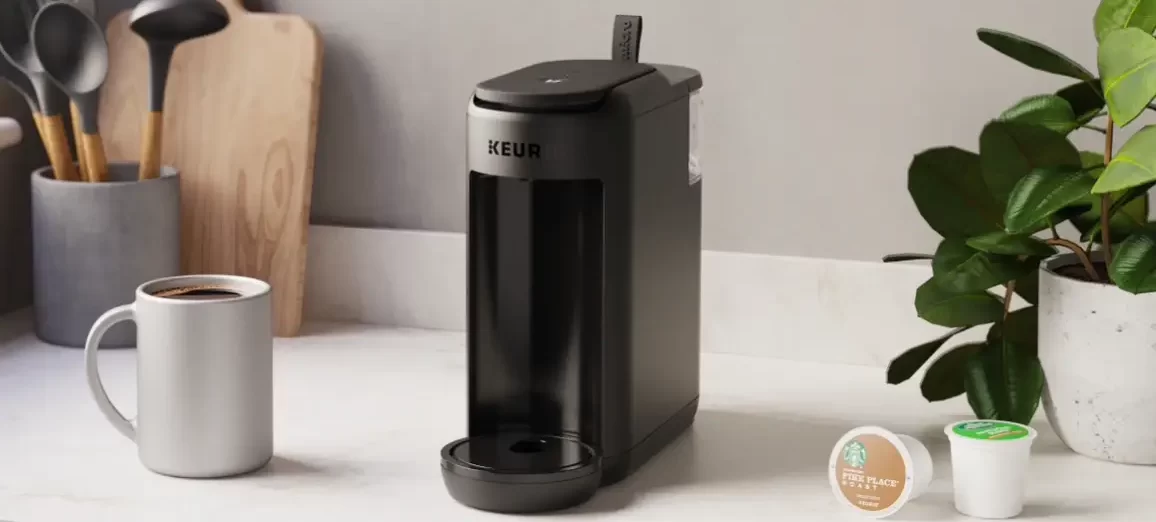
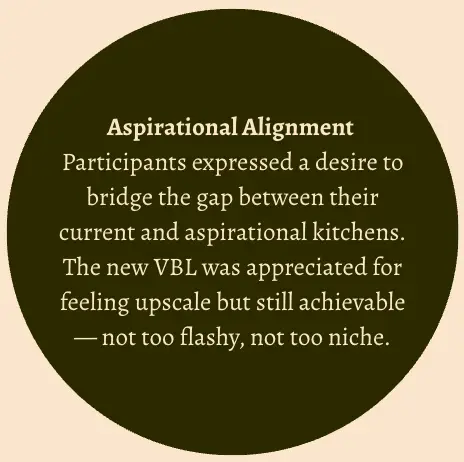
As the company prepared to introduce a new line of brewers that broke into an evolved Visual Brand Language (VBL), it was critical to understand how this new aesthetic direction would resonate with consumers. Would it feel like a natural evolution? Would it still be recognizable as part of the brand? Would it attract a new audience while retaining the loyalty of existing customers?
We set out to answer:
- How do consumers perceive the new design language?
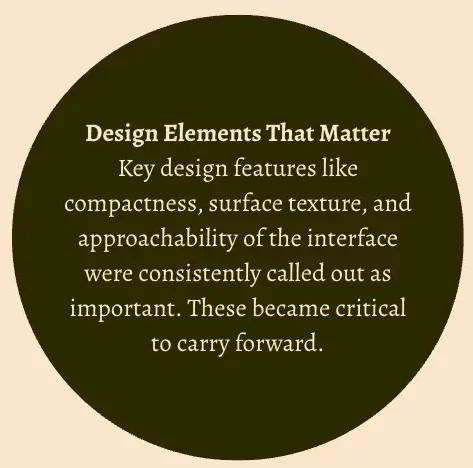
- Which aesthetic elements matter most to them, and why?
- Can this new look live alongside the existing product family?
- How well does it compete in the current market landscape?
My Role
- Designing the focus group protocol and stimulus materials
- Overseeing participant recruitment and session logistics
- Leading analysis and synthesis of qualitative data
- Delivering insight-driven recommendations to design, brand, and marketing teams
Approach & Methods
- Aspirational Aesthetics Assessment
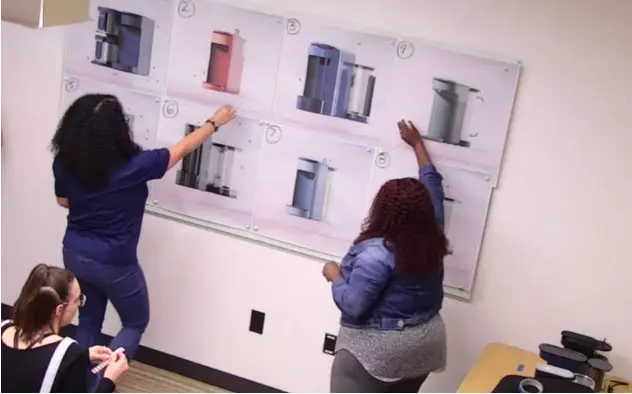
We began by exploring consumers’ ideal kitchen environments through a card-sorting exercise featuring words and images. This helped anchor their aesthetic values and personal preferences before introducing brand or product context.
- Aesthetic Criteria Rating
Using internally defined aesthetic attributes (e.g., friendly and approachable, space-saving), participants rated the importance of each, helping us understand what values mattered most, and why.
- Competitive Evaluation (Blind Testing)
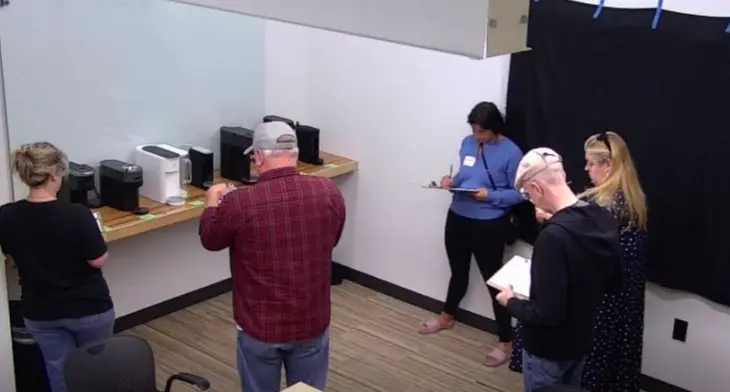
Seven products (existing, new, and competitive) were shown unbranded. Consumers rated each against the aesthetic criteria on a 5-point scale, allowing us to benchmark the new designs against both internal and external competitors, free from brand bias.
- VBL Review (2D + 3D Prototypes)
Consumers viewed 2D renderings and 3D prototypes of the new product line (Fusion VBL) without knowing the brand. They provided open feedback on what stood out, what worked, and what didn’t, across form, function, materials, and visual appeal.
- Brand Fit Assessment
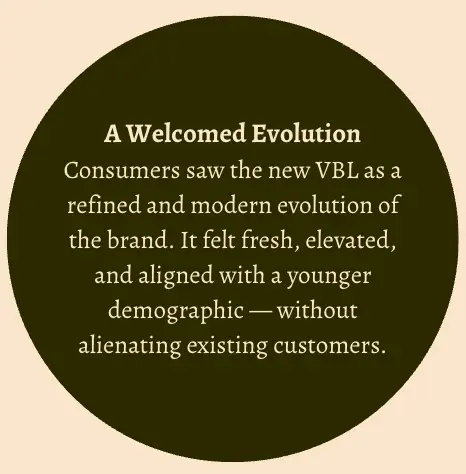
Finally, the brand was revealed. Consumers reflected on how the new and current VBLs fit together, how well they aligned with brand expectations, and whether the new look successfully expanded the brand’s aesthetic voice
Key Insights
Outcomes
Design Language Validated
The research confirmed that the new VBL is both competitive and cohesive, supporting the product’s ability to stand out on shelf while staying true to brand heritage.
Strategic Design Guidance
We delivered actionable guidance around:
- Which aesthetic attributes must remain consistent across product lines
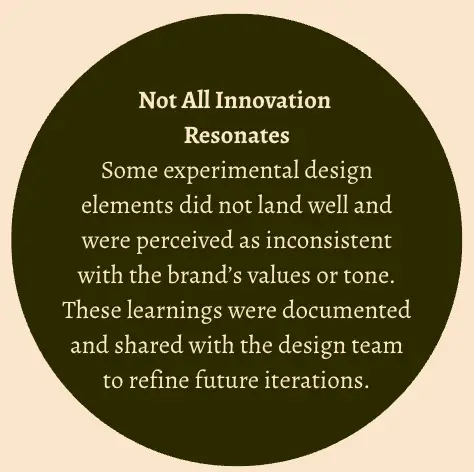
- What new elements signal innovation without straying too far
- How to position the new VBL to support both current customers and future-facing growth
Reflection
This project demonstrated the importance of qualitative nuance in design validation. We didn’t just test whether consumers liked the new look, we uncovered why certain elements resonated, how they supported brand perception, and what visual signals build consumer trust. By layering structured evaluation with open feedback, we empowered design and brand teams to evolve confidently, with consumer alignment at the core.